For Faculty
You've spent decades mastering your field. Your financial plan should reflect the same rigor.
Radiant provides specialized wealth management for faculty navigating the financial structures unique to academic careers — from your first retirement plan election through emeritus.
Your Path
Senior Leadership & Administrators
The decisions that come with the corner office are different. The advice should be too.
- 457(f) and deferred compensation
- Executive benefits and housing
- Post-leadership transition
Faculty
Financial guidance across your entire academic career.
Senior Leadership & Administrators
The financial complexity at the top of the institution is different.
University presidents, provosts, deans, and medical school chairs carry compensation structures most advisors have never seen. The timing on these decisions can swing six and seven figures of tax — and the election windows don't reopen.
- 457(f) Vesting
- Deferred Compensation
- Executive Housing
- Sabbatical Pay Sequencing
- Post-Leadership Income
- Emeritus Transition
Platform Expertise
Every institution structures its plans differently.
TIAA, Fidelity, Vanguard, Empower — the provider varies, but the complexity doesn't. Radiant works across all major academic and medical retirement platforms.
See our platform partnersEarly Career
You made your first TIAA election during new faculty orientation. Do you remember what you chose?
Most new faculty pick their TIAA allocation at random and never revisit it. That single decision compounds for an entire career.
- TIAA Traditional vs. CREF Stock vs. mutual fund options
- How much to contribute while balancing loans, emergency fund, and an assistant professor salary
- Roth versus traditional — a decision with real long-term consequences
- What happens to your TIAA account and pension credit if you move institutions
Mid-Career
The 403(b) and 457(b) together give faculty a savings advantage most people simply don't have.
Most faculty only contribute to one plan. The ones who use both shelter significantly more income than most employees in any industry.
- Dual plan contributions to maximize tax-advantaged savings
- The 15-year catch-up rule that almost nobody takes advantage of
- Sabbatical planning — what happens to contributions and benefits at reduced or no salary
- Whether you truly understand what your defined benefit plan will pay you and when
Pre-Retirement
Your TIAA Traditional balance is not like a 401(k). You cannot simply withdraw it when you retire.
The five to ten years before your Normal Retirement Date are when the most consequential decisions converge — and most are irreversible.
- Normal Retirement Date and what it means for your TIAA account options
- The annuitization decision — the single most significant financial choice many faculty will make
- Phased retirement and what half-time means for pension credit, benefits, and Social Security
- Healthcare bridge to Medicare if you retire before 65
- The 457(b) wrinkle — a three-year special catch-up that can roughly double the contribution limit before retirement, with separation from service (not 59½) as the distribution trigger
If that's where you are, you're not behind. You're right on time.
In Retirement
Who are you without the office, the students, the research, and the structure of academic life?
The financial mechanics are complex. But the harder question is the personal one.
- Managing income from multiple sources on different schedules
- Required Minimum Distributions — when they start, how much, which accounts
- TIAA beneficiary designations that may supersede your will
- The identity shift that comes with leaving a career that defined you
and physicians from












Listing of these institutions does not constitute an endorsement of Radiant Wealth Management by them.
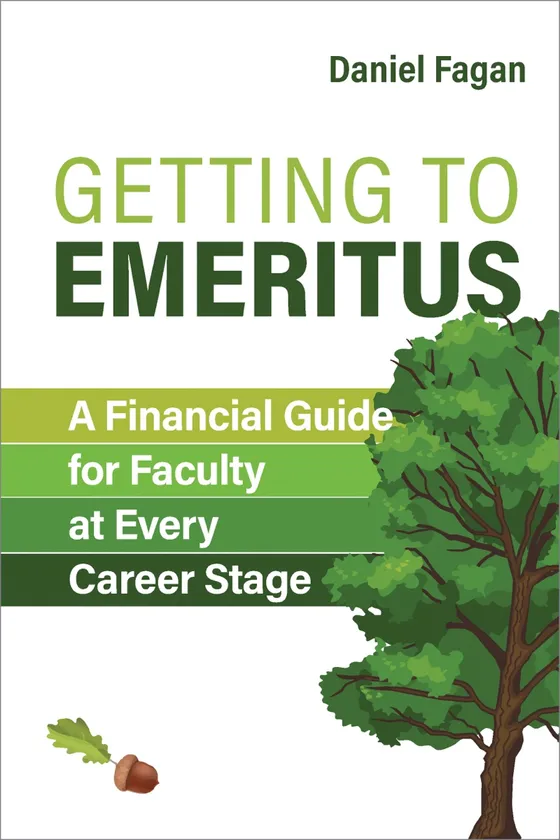
August 2026
Johns Hopkins University Press
The Book
Getting to Emeritus
An essential guide to purposeful financial planning for academics.
“Getting to Emeritus is a must-read for faculty, HR leaders, and retirement plan administrators alike. It cuts through the complexities of financial planning with clarity and practical tools that are invaluable for anyone navigating the financial ecosystem of higher education and building long-term wealth.”
Curtis N. Powell
Former Chief Human Resources Officer in Higher Education
Testimonials are based on unique experiences from current clients and are not representative of all client experiences. Testimonials are unsolicited, and no cash or non-cash compensation has been provided. As a result, clients do not receive any material incentives or benefits for providing testimonials. Investing involves risk, including the possible loss of principal and fluctuation of value. Past performance is no guarantee of future results. Additional information about NewEdge Advisors, LLC, is available in its current disclosure documents, Form ADV, Form ADV Part 2A Brochure, and Client Relationship Summary Report which can be found online at the SEC’s Investment Advisor Public Disclosure (IAPD) database at www.adviserinfo.sec.gov
Frequently Asked Questions
Common questions.
Our practice is deliberately focused on academics and physicians. Dan has spent over 25 years advising faculty at institutions including Yale, Brown, UConn, and Wesleyan. That focus is not incidental — it shapes everything from how we think about TIAA to how we approach the retirement transition. We are not a general advisory firm that happens to have some faculty clients.
Yes. Many faculty clients work with us while keeping their assets exactly where they are. We offer financial planning on an hourly or flat-fee basis where we help you make better decisions about your TIAA accounts, pension, and Social Security without requiring you to transfer anything. If ongoing wealth management makes sense later, we can discuss that separately.
It depends on the account type and your institution's plan rules. TIAA Traditional in particular has specific restrictions on how and when funds can be moved — this is one of the most important things to understand before you retire. CREF and mutual fund accounts are generally more flexible. We help clients understand exactly what their plan allows before making any decisions.
Your Normal Retirement Date, or NRD, is the date specified in your TIAA contract when you reach standard retirement age — typically 65, though it varies by institution and contract. It matters because certain TIAA account elections and payout options are tied to it. Understanding your NRD well before you retire gives you more flexibility and time to plan.
This is one of the most consequential decisions faculty make, and the answer depends on your full financial picture — your pension, Social Security, other assets, spending needs, and personal circumstances. There is no universal right answer. This is exactly the kind of decision we help clients work through.
A 457(b) is a deferred-compensation retirement plan offered by many universities and academic medical centers, available alongside your 403(b) or 401(k). Stacked on top of those plans, it can roughly double the income you shelter from taxes each year — a meaningful advantage many faculty don't realize they have. The catch is on the distribution side: you generally can't access the money until you separate from your employer, and the election you make at separation about how the funds come out is largely irreversible. Whether to use it depends on your savings capacity and tax bracket — and at private universities and academic medical centers, on whether you're comfortable that non-governmental 457(b) balances technically remain assets of the institution until paid out. For most faculty with the cash flow to fund both, it's one of the most underused tools in academic retirement planning.
Often yes, but it requires understanding the rules for each account type before consolidating anything. Some TIAA accounts can be transferred; others have restrictions. We help clients map out what they have, what the rules are, and what simplification is actually possible — without making moves that cost them options later.
We plan at the household level. We look at your combined income sources, accounts, pension benefits, and Social Security to build a picture of what retirement actually looks like for both of you together. Coordinating two different benefit structures is a routine part of what we do.
Let's talk about what's next.
Schedule a conversation to see how Radiant can bring clarity to your financial life — with the rigor you'd expect.
- Planning built around academic and medical careers
- Tax, estate, and investment strategies working together
- A dedicated advisor who understands your world
- Transparent fees with no product commissions
Prefer to speak directly? Skip the form and book a call now.